

Legacy Research
What does the research tell us about preserving wealth and passing it on with intention?
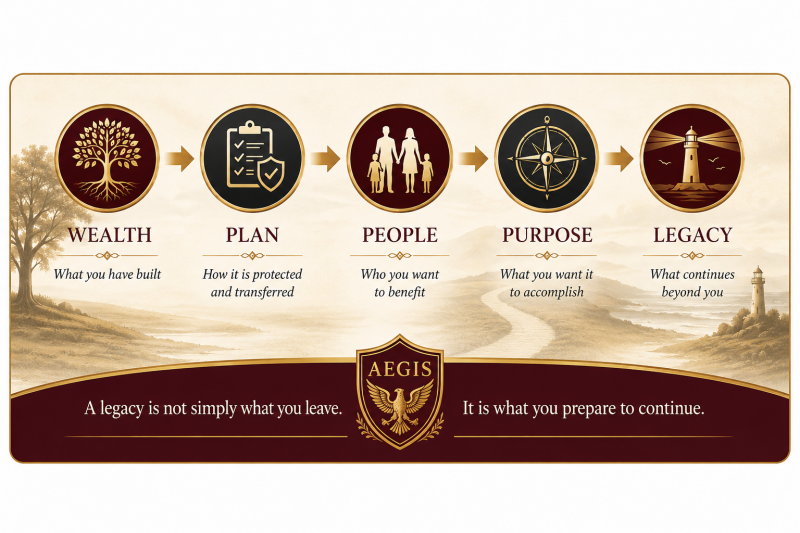
Legacy planning is about more than determining who receives your assets. Here we examine research and guidance surrounding wealth transfer, gifting, inheritance, taxes, beneficiaries, and the decisions that can shape what ultimately passes from one generation to the next.
Wealth can pass from one generation to the next in many ways. But how assets are owned, protected, titled, taxed, and ultimately distributed can significantly affect what beneficiaries actually receive.
Effective legacy planning begins by asking more than, “Who gets what?”
It asks:
“What do I want my wealth to accomplish, for whom, and for how long?”
Those answers can influence decisions involving beneficiaries, trusts, life insurance, retirement accounts, taxes, charitable giving, business interests, real estate, and other assets.
Preserve
Protect the assets and resources you have accumulated and consider the risks, taxes, and circumstances that could affect them.
Transfer
Coordinate beneficiaries, ownership, trusts, insurance, retirement accounts, and estate documents so assets can pass according to your intentions.
Prepare
Help the people who will eventually inherit understand the purpose, responsibilities, and values associated with the wealth they receive.
A Plan Is More Than a Set of Documents
A will or trust can be an important part of an estate plan, but documents alone do not determine how every asset will ultimately pass.
Retirement accounts, life insurance, jointly owned property, beneficiary designations, business interests, real estate, and other assets may each follow different rules or ownership arrangements.
That makes coordination important.
The estate documents, beneficiary designations, asset ownership, financial plan, and intended legacy should tell the same story.
Ownership
How an asset is titled can affect how it is controlled during life and how it may transfer at death.
Beneficiaries
Retirement accounts, life insurance, and other beneficiary designated assets should be reviewed as circumstances and intentions change.
Trust & Estate Documents
Wills, trusts, powers of attorney, health care directives, and related documents establish important instructions, but they should be coordinated with the assets they are intended to govern.
What Role Can a Trust Play?
A trust can be an important part of a broader estate and legacy plan, but the purpose of a trust is not simply to avoid probate.
Depending on the type of trust and how it is designed and funded, a trust may help provide instructions for managing assets during incapacity, establish how and when assets are distributed, provide continuity after death, address family circumstances, and coordinate the transfer of property according to the owner's intentions.
Just as important, creating the document is only part of the process.
A trust generally cannot control assets that were never properly coordinated with it.
Control & Continuity
A trust can establish who will manage trust assets if the person who created it becomes unable to do so and who will assume responsibility after death.
Distribution & Purpose
Rather than simply transferring everything outright, a trust can provide instructions for when, how, and under what circumstances assets are distributed to beneficiaries.
Funding & Coordination
Creating a trust does not automatically place every asset into it. Ownership, beneficiary designations, real estate, financial accounts, insurance, and other assets should be reviewed as part of the overall estate plan.
A trust is not the plan by itself. It is one tool that must work with the rest of the plan.
From Planning to Implementation
Understanding that a trust may be appropriate is only the beginning. The trust must be designed around the family's objectives, properly established, and coordinated with the assets and financial strategies it is intended to support.
AEGIS can facilitate living trust and estate planning services as part of the broader planning process, helping clients coordinate their financial plan, beneficiaries, asset ownership, insurance, retirement accounts, and legacy objectives with their estate plan.
Where legal or tax advice is required, we work in coordination with the appropriate qualified professionals.
What the Research Shows
Estate Planning Readiness
Research consistently shows a substantial portion of Americans do not have basic estate planning documents in place. The gap is not simply about wealth. Age, family circumstances, understanding, and procrastination can all affect whether planning actually gets completed.
Preparing the Next Generation
Successful wealth transfer involves more than transferring financial assets. Communication, education, family values, expectations, and preparing heirs for future responsibilities can all play an important role in sustaining a family's legacy.
The Great Wealth Transfer
Trillions of dollars are expected to move between generations over the coming decades. That transition makes beneficiary planning, estate documents, taxes, family communication, and coordination of financial assets increasingly important.